Credits: Creative Director Lina Lebbou
Ingredients
Ube: the purple yam that colours without colouring
Star of Filipino desserts, from ube halaya to halo-halo, ube owes its lavender colour to its natural pigments alone. Portrait of a sweet root, and of the powder that makes it easy to cook with.
The product in this article : Ube powderA yam, not a sweet potato
Ube is a yam, Dioscorea alata, a climbing root grown throughout tropical Asia. It is often confused with purple sweet potato or with taro, which have neither the same colour nor the same taste. Cut open, ube reveals deep purple flesh, sometimes marbled with white; cooked, it becomes meltingly soft and sweet, with notes that recall vanilla and hazelnut.
It is in the Philippines that ube became an icon. There it goes into ube halaya, a dense jam of grated root, milk and butter, into halo-halo, the Sunday iced dessert, into ice creams, buns and birthday cakes. That instantly recognisable purple has travelled the world with the ube lattes and cheesecakes of coffee shops.
Where the colour comes from
From the plant itself. Ube flesh is rich in anthocyanins, the pigments also found in blueberries or red cabbage. They give that lavender that turns intense purple when the preparation is concentrated, and that holds when cooked. No colouring is needed, and that is precisely what sets a pure ube powder apart from the commercial "ube" flavourings, often artificially tinted and scented.
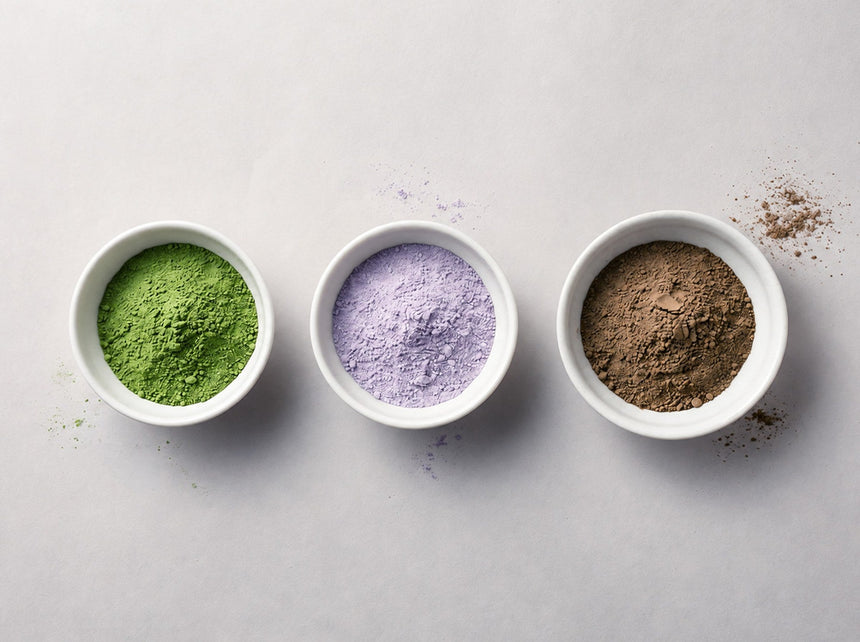
Our powder contains only one thing: ube, dried and then finely ground. The ingredient list is one word long.
The powder: how to use it
The fresh root is rare in Europe and slow to prepare. The powder, on the other hand, is measured by the spoon and keeps for months. Two ways to use it:
- Rehydrated: mix one part powder with three parts hot water, leave to stand for ten minutes. You get a purée close to the cooked root, perfect for an ube halaya, a cream or a bun filling.
- Straight into the mix: in a cake batter, a pastry cream, an ice cream base or hot milk. Count 8 to 10 g for 25 cl of milk in an ube latte, 20 to 30 g for 250 g of flour in a cake.
The taste of ube is discreet: it perfumes more than it imposes. It loves milk, coconut, condensed milk, vanilla, and goes very well with white chocolate. As for colour, bear in mind that an acidic medium (lemon, yoghurt) pulls the purple towards pink, and an alkaline medium pushes it towards blue: that is the chemistry of anthocyanins, not a flaw.
A few ideas to get started
An iced ube latte to discover the taste, a cheesecake to see what the colour does when baked, pancakes for Sunday morning. And for the most curious, homemade ube halaya, to spread on brioche: it is the recipe that made a whole country fall in love with ube.